
In less than six hours, zclassic will fork to create bitcoin private, a new privacy-oriented coin that uses zk-snarks to obfuscate transactions. Holders of bitcoin and zclassic will both be eligible to receive bitcoin private (BTCP) on a 1:1 basis. There’s just one problem: 93% of all zlcassic (ZCL) is on Bittrex exchange, which until today had neglected to pass comment on whether it would support the fork. As the price of ZCL has dropped sharply, bagholders have expressed their anger at Bittrex’ slowness to act.
Also read: Bitcoin Private Fork Aiming to Make Bitcoin More Anonymous
Bitcoin Private Angers the Public
 Bitcoin private has been a long time coming, with the fork of zclassic announced back in December of last year. Since then, traders have been steadily accumulating ZCL, causing its price to rise from $4 in early December to a high of almost $200. Everyone knew that ZCL would dump hard, but few expected it to do so before the fork. In the last 48 hours that’s what’s happened though, as the coin has plunged to a low of $73, a drop of 50% in less than a week.
It had been widely assumed – or at least hoped – that Bittrex would support the fork. Given that 93% of the trading volume comes from the U.S. exchange, it has the power to largely make or break the launch of bitcoin private. As ZCL bagholders have vented their frustrations, other traders have crowed about selling the coin days ago, leading to acrimony. The fork is scheduled to take place on February 28 around 5pm UTC.
The exchange finally broke its silence just hours before the fork was due to occur. In a statement, it wrote: “Bittrex will NOT be supporting the market for Bitcoin Private but due to issues with the Zclassic wallet, we will offer Zclassic holders on Bittrex partial support through claiming and withdrawing BTCP…Bittrex will suspend the Zclassic market approximately 15 minutes before the snapshot time and perform an on-exchange snapshot of ZCL balances. The market will re-open after 5pm UTC once the on-exchange snapshot is complete.”
The exchange probably won’t be listing BTCP as a tradable coin, it seems, and it certainly won’t be issuing bitcoin private on a 1:1 basis to BTC holders. While ZCL holders were relieved to learn this news, for some traders the announcement was a case of too little, too late.

A Good Idea Badly Executed?
The arguments for and against bitcoin private have been rehashed enough times. Given zclassic’s reliance on Bittrex for trading volume, it seems odd that Rhett Creighton and his team wouldn’t attempt to come to some sort of informal agreement with the exchange in advance. Without Bittrex’ promise of participation, the whole affair was bound to create bad blood and get the launch of bitcoin private off to a controversial start. Nevertheless, there has been nothing preventing traders from withdrawing their zclassic to a wallet or sending it to an exchange that has promised to support the fork in advance, such as Cryptopia.

Historically, Bittrex has been reluctant to support bitcoin forks, with bitcoin gold the last to be listed on the exchange. Other exchanges, including Hitbtc and Kucoin, have announced that they will issue BTCP to BTC holders, but Bittrex – which isn’t exactly famed for its communication – remained silent right up until the last possible moment, before finally caving to public pressure. While zclassic holders are entitled to feel aggrieved at Bittrex’ lack of action, exchanges are not obligated to dispense forked coins like free candies.
For those who truly believe in bitcoin private, the price of zclassic in the run-up to the fork is largely irrelevant. All that matters is that they move their ZCL to a supporting wallet or exchange, sit tight, and let the fork take its course. For traders, simply chasing the pump, going all-in on a coin that was already up 5,000% in three months was always going to be a risky move.
Do you think Bittrex should have declared its support for BTCP sooner? Let us know in the comments section below.
Images courtesy of Shutterstock, and Coincodex.
Get our news feed on your site. Check our widget services.
The post Forking Today: Bittrex’ Stance on Bitcoin Private Angers Zclassic Bagholders appeared first on Bitcoin News.
from Bitcoin News http://ift.tt/2sXzT4o
via IFTTT



 Detroit is a well known industrial city and Michigan’s most populous city. However, the region has been dealing with a tumultuous economy and the city residents have been suffering from financial hardships for years. That hasn’t stopped a large influx of bitcoin ATMs from being installed in the city as Detroit now has over 29 machines. The regional newspaper the
 According to the local news outlet, 14 Detroit stores in the Metro region with bitcoin ATMs were contacted, but none of the owners wanted to make a statement. The FDD researcher Fanusie doesn’t believe that money laundering is a big issue for crypto-ATM owners in Detroit. Fanusie emphasizes, “That kind of money would essentially be noticed by federal regulators — But if you want to use them to pay a local drug dealer, say $50 to $100, then maybe it’s OK, effective.”
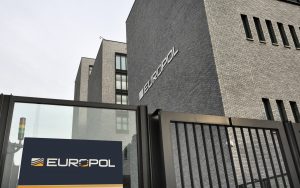 The European Union Agency for Law Enforcement Cooperation (Europol), formerly known as the European Police Office and Drugs Unit, is concerned that sophisticated criminals are switching to alternative cryptocurrencies while investigators are just focusing on bitcoin. Monero, zcash and dash are specifically mentioned as now appearing on the radar of the EU law agency.
 This shift from bitcoin to altcoins is supposedly fueled by two ongoing trends. First, bitcoin exchanges are coming under regulatory pressure to adopt the same anti-money laundering and know your customer (

 A Las Vegas news show has featured a segment on an adult entertainment venue in the city which enables its dancers to get payments from clients directly via bitcoin transfers. The use of the cryptocurrency was primarily showcased as a privacy enhancing measure (preventing your wife from seeing the payments on the credit card bills) as well as an attraction for affluent bitcoin investors.
 Besides the privacy concerns of the patrons, the use of cryptocurrency allows the dancers to avoid explaining to banks where they get large amounts of cash. “I’m not going to name names, but there are certain banks that… will shut down your account and actually deny you from having an account because we work in the adult entertainment industry”, said Summer Chase.
 The first bank was Bangkok Bank, which
  TDAX is a privately-owned Thai cryptocurrency exchange. According to the publication, the exchange still has bank accounts with two other financial institutions: Kasikornbank (Kbank) and Siam Commercial Bank (SCB). Last week, Kbank confirmed that it was still providing service to TDAX.
 TDAX is also preparing to launch some initial coin offerings (ICOs). However, the regulatory uncertainty has prompted the exchange to announce that its ICO plans are now postponed.
 Blockchain-based payment service provider Bitwala announced on Monday that it is building an online bank account service, “enabling a seamless transition between the crypto and fiat worlds.” The account combines “all the features of traditional banking with the crypto economy,” the company added, noting that “We aim to introduce the new Bitwala accounts to the world within the next few months.”
 “Bitwala accounts will be fully regulated by the Federal Financial Supervisory Authority of Germany (Bafin),” the company stated, adding that its application is currently pending. With Bafin’s approval, the deposit guarantee scheme of German banks will guarantee customers’ funds of up to €100,000 (~USD$123,000).
 The new Bitwala accounts will come with a debit card linked to customers’ accounts.
 However, on January 5, the company